The wine Rome drank first
Long before anyone in Rome thought to import wine from Tuscany or Piedmont, they drank Frascati. The town sits on the western slope of the Alban Hills, on volcanic soil that has been farmed for wine since roughly 1000 BC — winemaking artifacts from that period have turned up in the area, predating the Roman Republic itself. By the time the popes moved their summer households to the hill villages above Rome, Frascati's white wine already carried a reputation sturdy enough to earn it a nickname that has outlasted empires: the golden wine of the Romans, later the Pope's wine, served at papal tables and in the taverns of Rome in equal measure.
This is not folklore dressed up for tourists. The volcanic soil of the Alban Hills — porous, mineral-rich, quick to drain — is the same soil that has defined the wine for millennia, and it is why a serious frascati wine tour from Rome belongs in the same conversation as any of Italy's better-known wine regions, not as a footnote to them. Rome, for most of its history, was a wine-drinking city surrounded by wine-producing hills. Frascati was the nearest and, for centuries, the most important of them. That history is the reason to go, before any tasting glass is poured.
What Frascati is (and what it isn't)
Frascati wine comes in three legally defined tiers, and understanding them takes about a minute. Frascati DOC is the everyday white — light, dry, mineral, meant for drinking young. Frascati Superiore DOCG is the same base of grapes (mostly Malvasia and Trebbiano, grown to stricter yields) held to a higher standard, with more structure and ageing potential. Cannellino di Frascati DOCG is the traditional sweet style, made from late-harvested grapes, historically the wine served at the end of a meal rather than during it. None of this requires prior wine knowledge to appreciate; it simply explains why a glass labeled Frascati at one estate can taste meaningfully different from a glass labeled Frascati at another.
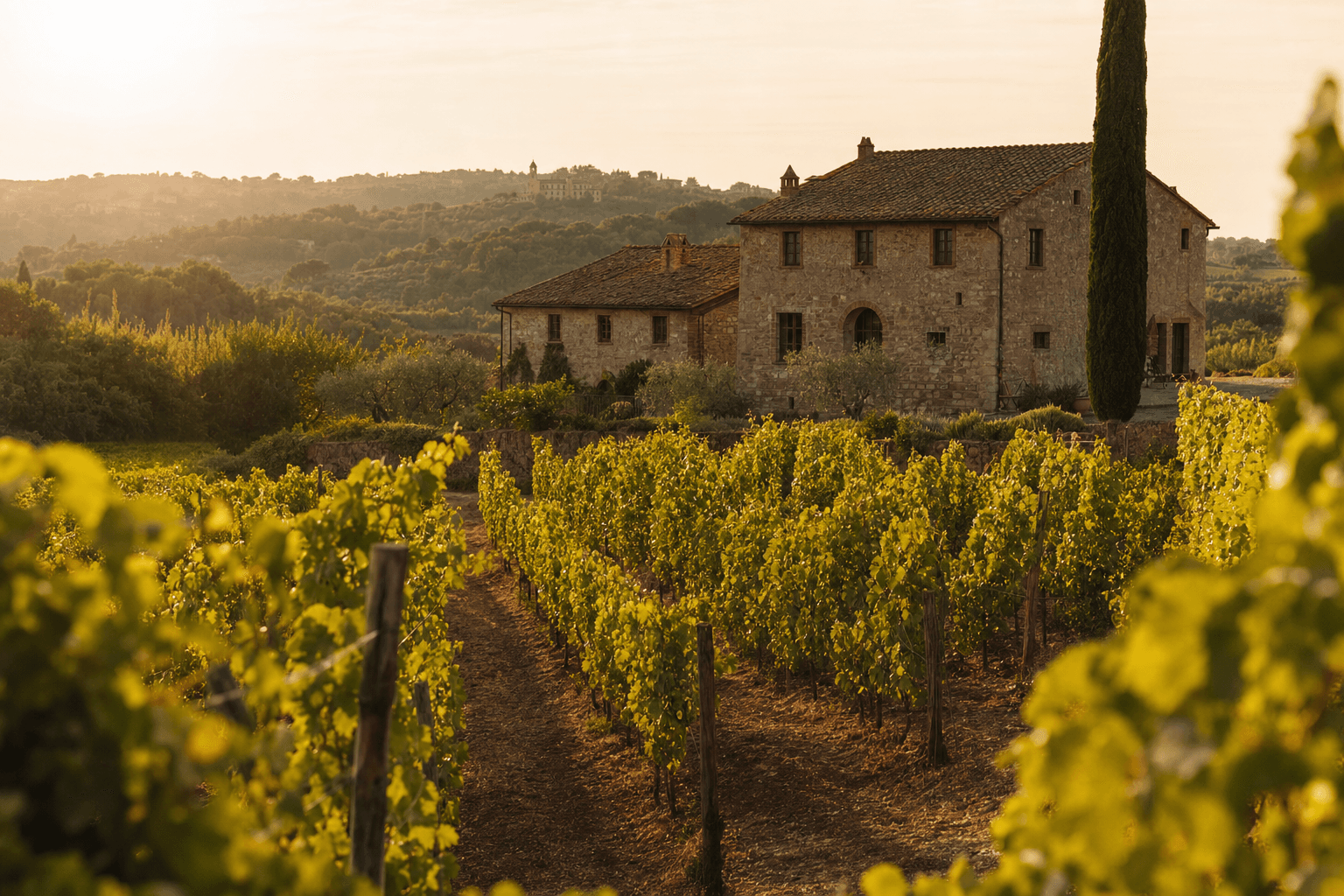
What Frascati is not is a miniature Tuscany. There are no rolling postcard estates with cypress-lined driveways here. The wineries around the town are small and overwhelmingly family-run, several now in their sixth or seventh generation, working out of 16th-century farmhouse estates and, in a number of cases, cellars and wine caves that date to the Roman era itself — carved into the same volcanic tufo the vines grow in. That is the honest trade: intimacy and continuity in place of scale and spectacle. For a reader curious about what the ancient Romans actually drank, and how directly that habit survives, Frascati is the clearest living answer within reach of the city.
The town itself
Frascati's historic center is built around a cluster of Renaissance villas — grand summer estates that Rome's noble families raised on the hill from the 16th century onward, taking advantage of the elevation and the views back down over the capital. Villa Aldobrandini, with its formal gardens climbing the slope above the town, is the best known of these and still dominates the skyline from the main piazza.
At street level, the culture is more modest and, arguably, more useful to a visitor: the fraschette, Frascati's traditional wine taverns, where locals have gathered for generations over a carafe of the house white, porchetta carved to order, and simple plates meant to be eaten slowly. This is a bakery-and-porchetta town as much as a wine town, and the two traditions share the same table.
One honest line of history belongs here: Frascati was heavily bombed during the Second World War, and much of what looks centuries-old in the center was in fact carefully rebuilt afterward. It does not diminish the town — if anything, it explains the particular pride Frascati takes in its surviving wine caves and villa gardens, the parts of its identity the war could not reach. From the terraces above the piazza, the view back toward Rome, hazy on the plain below, is reason enough to make the trip even without a glass in hand.
How the day works
The practical case for Frascati is almost absurdly simple: a direct regional train from Roma Termini gets you there in twenty to thirty minutes, for around two euros one way. It is, without much competition, the easiest genuine day trip from Rome — easier than the coast, easier than Tuscany, easier than most of what gets marketed as a Rome day trip. The town also sits at roughly 335 meters of elevation, which means a noticeably cooler, breezier afternoon than the one you left behind in the city, a real advantage in the Roman summer.
A standard visit follows a shape that has served the town well for a long time: a winery visit with a tasting of around three wines, ideally moving from a Frascati DOC through to a Superiore or the Cannellino to show the range; a walk through the historic center past the villas and down into the fraschette quarter; and a long, unhurried lunch — porchetta, local cheeses, bread from a town bakery, more of the wine you just tasted. None of it requires more than a few hours, which is exactly why Frascati works as well as it does: it is a full cultural morning or afternoon that still leaves the rest of the day in Rome intact, and it fits naturally as part of planning a 2026 Rome trip that mixes the monuments with something quieter.
Going with a guide
The difference between visiting Frascati alone and visiting it with someone who knows the winemakers is mostly a matter of which table you sit at. On your own, you get the tasting counter, the printed sheet, the polite version. With an introduction, you get the winemaker's table — the seventh-generation owner explaining, in terms that make sense whether or not you speak Italian, why this particular plot of volcanic soil makes a Superiore taste different from the DOC bottled forty meters away, or walking you down into a cellar cut by hands that were working before the Renaissance villas up the hill were built. That depth is not available at a bar; it has to be arranged.
For readers who want exactly that, our Frascati half-day wine tour is built around a working family winery, a proper tasting flight through the DOC, Superiore and Cannellino styles, and a walk through the historic center timed to end at a fraschetta table rather than a gift shop. It suits anyone who wants the golden wine of the Romans explained by the people still making it, without having to arrange the introductions themselves.
For travelers with more time and an appetite for the wider Castelli Romani day trip — the string of hill towns beyond Frascati, each with its own wine and its own version of the same papal-summer history — our full-day Castelli Romani tour extends the same idea across the whole range of hills.